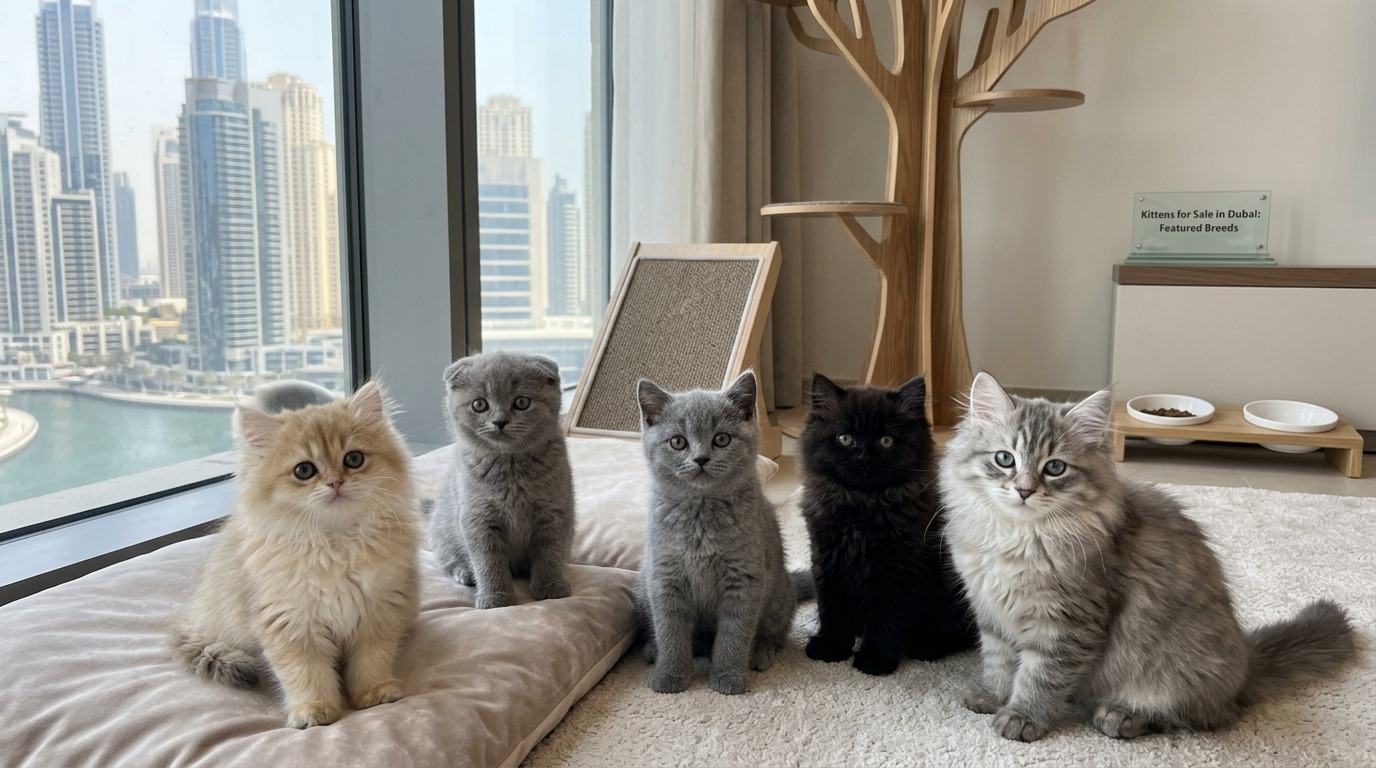
Dubai’s kitten market has gotten specific. Listings no longer just say “Persian” or “British Shorthair” — now you’ll see golden chinchilla, NY11, NY12, hypoallergenic Siberian, British Longhair. Some of those labels mean something real. Some are just marketing. Here’s what each breed actually offers, what it costs here, and which terms are worth paying extra for.
The most common pedigree cat in Dubai, and usually the most affordable entry point. Persians are calm, quiet, and genuinely low-energy — good for apartment living and first-time owners who want a lap cat rather than a climber.
Price in Dubai: AED 2,500-3,500 for standard colours; cream golden chinchilla Persians run higher, around AED 6,500.
The honest tradeoff: daily grooming, not weekly. That long coat mats fast, and flat-faced (brachycephalic) Persians can have breathing and tear-duct issues. Ask the breeder about nose length — a moderately flat face ages better than an extremely flat one.
Instantly recognisable folded ears and round faces. Calm, adaptable, well suited to indoor apartment life.
Price in Dubai: AED 3,000-4,500, with black and rarer colours toward the top of that range.
What every buyer should ask: the folded ear comes from a cartilage gene that affects joints throughout the body, not just ears. Fold-to-fold breeding significantly raises the risk of osteochondrodysplasia, a painful joint condition. Responsible breeders pair a folded-ear cat with a straight-eared one. Ask directly which pairing produced the litter — it’s the single most important question for this breed.
British Shorthair Kittens
Plush dense coat, round face, sturdy build, famously easygoing. The low-maintenance alternative to a Persian: weekly brushing instead of daily, more independent, adapts well to busy households.
Price in Dubai: AED 3,000-4,000 typically, up to AED 8,000 for top show-quality pedigree lines.
Best for: people who want the plush look without the grooming commitment.
British Longhair Kittens
Same breed foundation, longer coat. Rarer in the UAE than the shorthair, so expect fewer available litters and a slightly higher price. Temperament is essentially identical — calm, tolerant, not especially demanding.
Price in Dubai: generally above British Shorthair pricing, depending on availability and pedigree.
Worth knowing: grooming sits between Shorthair and Persian — a few times a week, not daily.
Siberian Kittens (the hypoallergenic option)
The breed allergy-sensitive buyers ask about most, and the claim has real science behind it: Siberians produce less Fel d 1, the protein responsible for most cat allergies, which is spread through saliva onto the coat during grooming.
Price in Dubai: AED 3,500-6,000, with golden Siberians at the higher end.
Be realistic about “hypoallergenic”: lower Fel d 1 is not zero Fel d 1. No cat is fully hypoallergenic, and some allergy sufferers still react to Siberians. If allergies are the reason you’re buying, spend real time with the specific kitten or a parent cat before committing — not just time with the breed in general.
What NY11, NY12 and NY25 Actually Mean
These aren’t breeds and they aren’t rarity grades. They’re pedigree colour codes describing golden shaded coats, most often seen on British Shorthairs, British Longhairs and Siberians.
N = black base, Y = golden
NY11 — shaded golden; roughly the top eighth of each hair is darkened
NY12 — golden tipped (registry naming varies; FIFe pedigrees sometimes record an NY12 cat as NY11)
NY25 — golden ticked tabby, with banding along the hair shaft creating a layered effect
Two practical takeaways. First, codes differ between registries, so the same cat can carry different codes on different paperwork — that’s normal, not a red flag. Second, a colour code describes appearance, not health or temperament. Golden coats command a premium in Dubai because they’re in demand and harder to breed, not because the cat is better. Pay for it if you love the look; don’t pay for it thinking you’re buying quality.
What to Check Before Buying Any Kitten in Dubai
Vaccination and deworming records with actual dates
Microchip status — required before Dubai Municipality registration
Minimum 12 weeks old before leaving the mother, regardless of what a seller offers
Pedigree papers if you’re paying a pedigree price (WCF, FIFe, TICA or similar)
Breed-specific screening: joint health for Scottish Folds, breathing and tear ducts for flat-faced Persians
A video call or in-person visit showing the kitten with its mother and littermates
Registering Your Kitten with Dubai Municipality
Every cat in Dubai needs an ISO-standard microchip, age-appropriate vaccinations, and Dubai Municipality registration. Most licensed vet clinics handle this with your Emirates ID and the kitten’s vaccination records. Sort it out in the first week rather than leaving it — unregistered pets can result in fines.
Which Breed Fits Your Household?
Want a lap cat and don’t mind daily grooming? Persian. Want the plush look with minimal effort? British Shorthair. Allergies in the household? Siberian, with a trial visit first. Drawn to the folded-ear look? Scottish Fold, but only from a breeder who can confirm fold-to-straight pairing.
Come by the shop Tom and jerry if you’re weighing a specific kitten — we’re glad to go through pedigree papers, health records and registration steps before you commit to a deposit.






Leave a comment